What Can I Do for Vertigo? A Vestibular Physiotherapist Explains

If you’ve ever experienced vertigo, you know how frightening it can be.
One moment you’re fine — the next, the room feels like it’s spinning. You might feel nauseous, unsteady, or afraid to move your head at all. Many people tell me they start questioning simple things: Is this serious? Am I going to fall? Is this ever going to stop?
As a vestibular physiotherapist at MUV Therapy Physio & Sports Medicine in Mississauga, I see people come in every week feeling anxious, confused, and frustrated by vertigo. Most have already tried to “push through it” or Googled exercises — often making things worse.
The good news is this:
Vertigo is very treatable once you understand what’s causing it.
Let’s start there.
What Is Vertigo?
Vertigo isn’t a diagnosis — it’s a symptom. And that distinction matters.
Vertigo often feels like:
The room is spinning or shifting when you’re still
Dizziness triggered by rolling in bed, bending down, or turning your head
Nausea, imbalance, or a “floating” sensation
A constant fear that movement will make things worse
For many people, the most distressing part isn’t the spinning itself — it’s the loss of confidence. You stop trusting your body. You move cautiously. You avoid things you used to do without thinking.
In most cases, vertigo comes from a problem in the vestibular system, which includes the inner ear and its connection to the brain. This system helps control balance, eye movement, and spatial awareness.
Common Causes of Vertigo (and Why Guessing Can Backfire)
One of the biggest mistakes people make is assuming all vertigo is the same.
In reality, some of the most common causes include:
Benign Paroxysmal Positional Vertigo (BPPV)
Tiny crystals in the inner ear shift out of place, causing sudden spinning with certain movements.Vestibular hypofunction
One side of the vestibular system isn’t sending clear signals, often after illness or injury.Vestibular neuritis or labyrinthitis
Typically following a viral infection.Neck-related dizziness
Less common, but often confused with inner ear vertigo.
Each of these feels similar — but they require very different treatments. This is why random advice or exercises can be so frustrating.
“I Googled Vertigo Exercises… Should I Be Doing Them?”
This is one of the most common questions I hear.
People search:
“vertigo exercises”
“exercises for vertigo”
“what can I do for vertigo”
And I understand why. When you feel dizzy, you want something to help — fast.
But here’s the honest truth:
The wrong exercises can make vertigo worse.
I’ve seen people:
Do BPPV exercises for a problem that wasn’t BPPV
Push through dizziness when rest or gradual exposure was needed
Lose confidence because symptoms didn’t improve — or intensified
For example:
BPPV often requires very specific repositioning manoeuvres
Vestibular hypofunction responds best to graded exposure and balance retraining
Some dizziness should not be treated with exercises initially at all
That’s why assessment comes first — always.
What Can I Do for Vertigo Right Now?
If you’re dealing with vertigo, here’s what I recommend as a starting point:
Pause the random online exercises until you know the cause
Pay attention to triggers — movements, positions, timing, patterns
Get assessed by a vestibular-trained physiotherapist
A proper vestibular assessment isn’t rushed. It looks at:
Eye movements
Head and body position changes
Balance and coordination
How your symptoms behave with specific tests
This allows us to determine:
Where the problem is coming from
Which movements are safe
What will actually help you recover — and what won’t
How Vestibular Physiotherapy Helps
Vestibular physiotherapy is a specialized area of physiotherapy focused on dizziness, vertigo, and balance problems.
At MUV Therapy Physio, vestibular rehab is:
One-on-one
Hands-on
Individualized to your specific diagnosis
There are no machines, no assistants, and no generic programs. The focus is on helping you rebuild confidence in your movement — safely and progressively.
A Free Vestibular Rehab Guide (Start with Clarity)
To help people make sense of vertigo and dizziness, we created a free Vestibular Rehabilitation Guide.
It covers:
Common causes of vertigo (in plain language)
Why some exercises help — and others don’t
When dizziness is likely to improve on its own
When it’s time to seek professional care
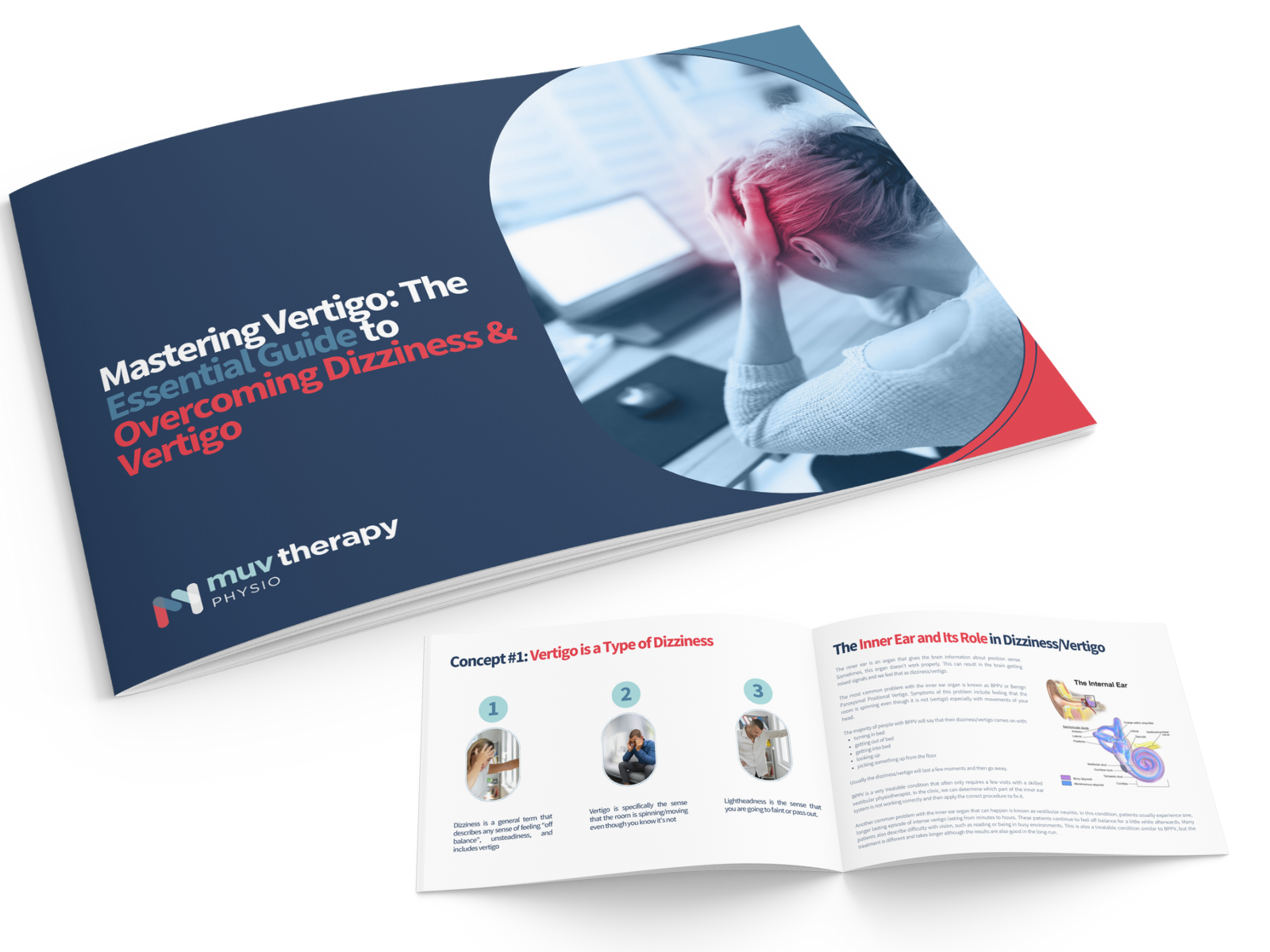
Free Vestibular Rehabilitation Guide
Click the image to download a free copy of my vestibular rehabilitation guide.
This guide isn’t meant to replace care — it’s meant to reduce fear and confusion so you can make informed decisions.
When Should You Seek Professional Help?
You should consider booking an assessment if:
Vertigo keeps coming back
Symptoms last more than a few days
You feel anxious about moving
Dizziness is affecting work, driving, or daily life
You’re unsure what exercises are safe
You don’t need to “tough it out” — and you don’t need to figure this out alone.
Vestibular Therapy in Mississauga
If you’re searching for vestibular therapy or physiotherapy for vertigo in Mississauga, our clinic is located in the heart of Streetsville and focuses on calm, evidence-based, one-on-one care.
Our goal is simple:
Help you feel steady again — physically and mentally — so vertigo doesn’t control your life.