

Why Does My Heel Hurt When I Run? It Could Be Achilles Tendinopathy…But There’s a Way Back
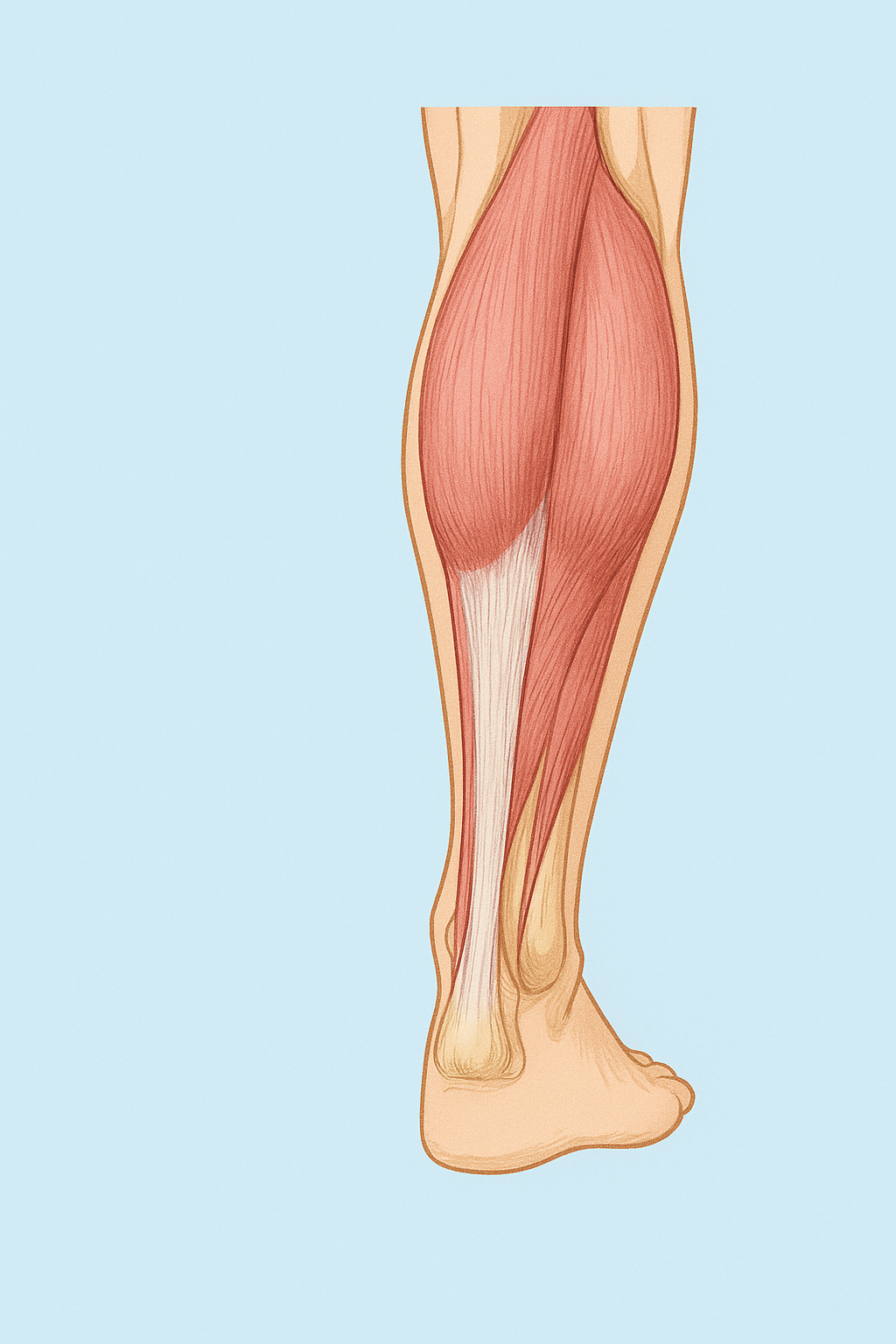
If you’ve recently ramped up your running mileage, switched shoes, or started hill training, and now your heel hurts—there’s a good chance it’s Achilles tendinopathy.
This is one of the most common running injuries we see at MUV Therapy Physio & Sports Medicine—and the good news is, it’s treatable. But treating it the wrong way (or ignoring it altogether) can turn it into a long-term problem.
Let’s break it down simply:
What is Achilles tendinopathy?
Why does it happen?
And most importantly—how do you fix it and get back to running?
What is Achilles Tendinopathy?
The Achilles tendon connects your two major calf muscles—the gastrocnemius and soleus—to your heel bone. It’s responsible for letting you push off the ground when you run, walk, or climb stairs.
With Achilles tendinopathy, this tendon gets overloaded—either from a sudden increase in activity, training errors, or even the wrong pair of shoes. It starts with irritation and inflammation. But if not addressed early, it can lead to degeneration of the tendon, making it weaker and more reactive over time.
That’s why rest doesn’t work. In fact, it can make things worse. When the tendon isn’t exposed to the right kind of load, it doesn’t recover—it just gets stiffer and more sensitive.
The Key to Recovery: Load It Right
The most effective way to treat Achilles tendinopathy is not with ice packs or endless rest—it’s by loading the tendon properly through a carefully progressed strength program.
That usually includes exercises like calf raises, but done in a way that’s personalized for your stage of injury and current capacity. Do too much, and you flare it up. Do too little, and the tendon doesn’t adapt.
That’s why our team builds custom rehab programs for every patient—because cookie-cutter programs just don’t work.
What Caused It in the First Place?
Achilles tendinopathy doesn’t happen out of nowhere. A few common culprits include:
Rapid increases in mileage or speed work
Transitioning to interval or hill training
Switching to shoes with less support or heel drop
Worn-out footwear that no longer supports your stride
Once we identify the root cause, we not only treat the pain—you get a roadmap back to running without setbacks.
How the McKenzie Method Can Help
At MUV Therapy, we also incorporate the McKenzie Method of Mechanical Diagnosis and Therapy (MDT) to rule out other sources of heel pain—especially if your symptoms might be referring from your lower back or if your heel pain isn’t responding to standard treatment.
This approach allows us to quickly identify whether your Achilles is the real issue or if another part of your body is contributing to the problem—so you don’t waste time on the wrong treatment.
Not All Heel Pain is Achilles Tendinopathy
Sometimes heel pain is due to something else:
A lower back problem that’s referring pain to the heel
A nerve irritation
Plantar fasciitis or joint restrictions
Or just poor biomechanics or gait patterns
That’s why a thorough assessment is critical. We’ve helped hundreds of patients discover the real reason behind their pain—often after months of failed treatments elsewhere.
You Can Get Back to Running Without Pain
Our physiotherapists work with runners of all levels to recover from Achilles issues and prevent them from coming back. We’ll help you:
Regain strength and confidence in your calf and tendon
Develop a clear, progressive return-to-run plan
Adjust your training and shoes so this doesn’t happen again
📞 Want to know if we can help?
Call us at (365) 655-8225 and ask for a Free Phone Consultation with one of our experienced physiotherapists. We’ll help you figure out what’s going on—and what to do next.
Let’s get you back to doing what you love.
